The Science of Sound Healing

The Science of Sound Healing Sound healing is sometimes dismissed as something mystical or “woo,” but the foundation of sound healing is actually physics and neurophysiology. All sound is vibration. These vibrations travel through air, water, and matter which means they travel through the body itself. Since the body is mostly water and is made of vibrating molecules, it naturally responds to sound waves.
There are three basic scientific principles behind sound healing:
1. Everything vibrates.
At the cellular level, atoms and molecules are in constant motion. Tissues, organs, and even brainwaves have measurable frequencies.
2. The body entrains to external rhythm.
Entrainment is a well-documented phenomenon where one oscillating system syncs to another. Examples include:
Heart rate syncing to rhythmic breathing
Brainwaves syncing to rhythmic auditory stimulation
Group drumming creating synchronized neural patterns across participants
This is why steady drumming, singing bowls, or chanting can shift your state quickly.
3. Sound influences the nervous system.
Different frequencies and rhythms can activate either the sympathetic (stress) or parasympathetic (rest) branches of the nervous system. Slow tempos and sustained tones tend to activate “rest-and-digest” responses: lower cortisol, improved heart rate variability, slower breathing, and relaxed muscles.
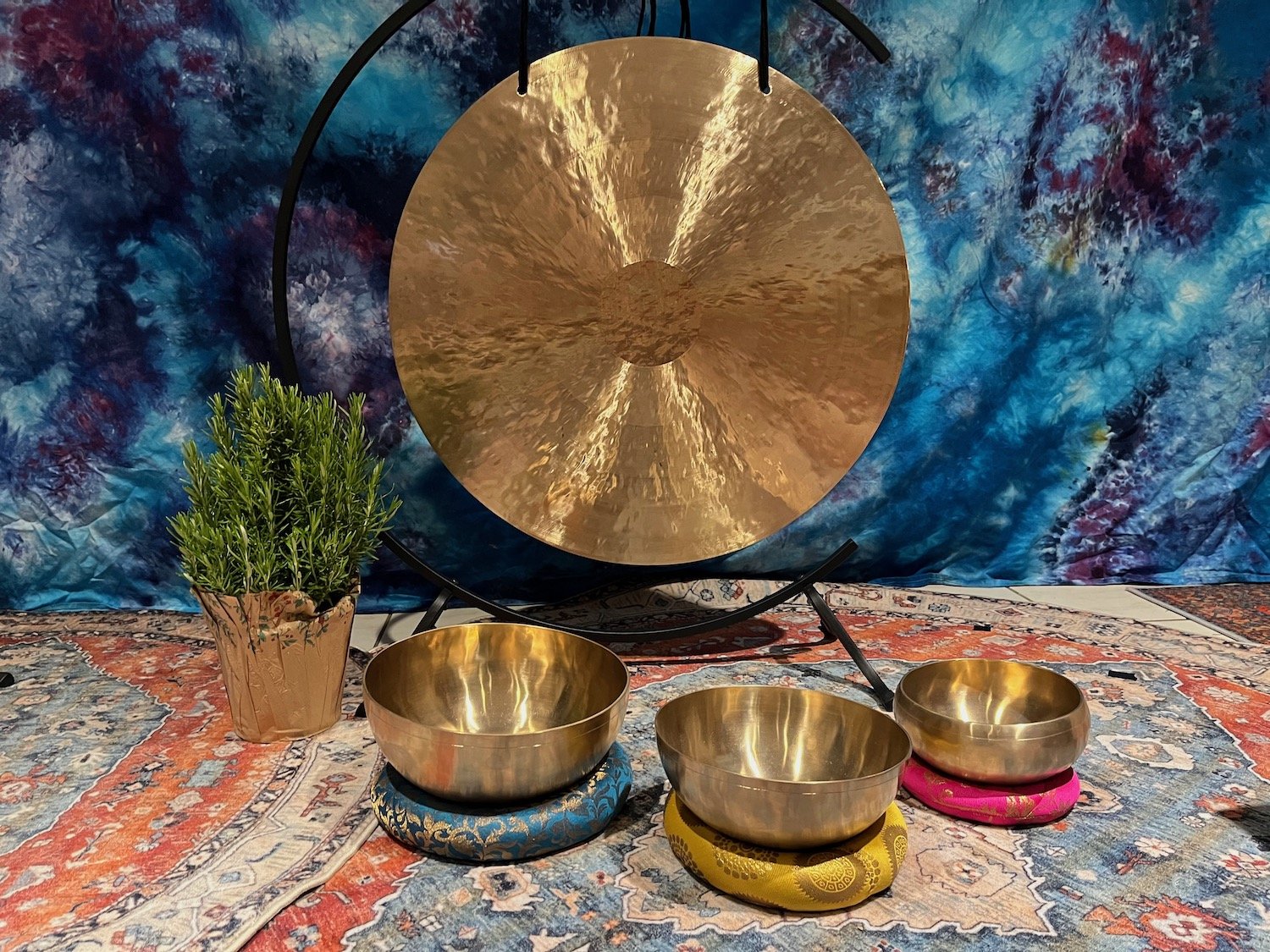
Sound healing practices including gongs, crystal bowls, tuning forks, and group drumming have shown measurable benefits such as:
reduced anxiety
improved sleep
decreased pain perception
lower heart rate
improved mood and emotional regulation
Science is still catching up to what many cultures have practiced for millennia. Humans have used sound to regulate emotion, support healing, and connect with one another since the beginning of time. From Gregorian chant to Indigenous drumming, from lullabies to community singing, sound has always been one of our most accessible tools for shifting consciousness.
Sound healing isn’t about forcing the body into calm. It’s about offering the body a rhythmic or vibrational environment that it naturally aligns with. When we give the nervous system a steady signal, it often responds by finding its own equilibrium.